Roleplay & Fantasy: Where Imagination, Consent, and Boundaries Meet
By PROUD & Kinky Staff
Fantasy has always been part of human intimacy. From childhood games of make-believe to the stories we tell ourselves as adults, imagination helps us explore identity, power, vulnerability, and desire. In kink and BDSM spaces, roleplay and fantasy become intentional, collaborative tools for consenting adults to step outside everyday norms and into something curated, negotiated, and deeply personal.
At its best, roleplay isn’t about escaping reality. It’s about understanding ourselves more clearly through creativity, communication, and trust.

What Is Roleplay in a Kink Context?
Roleplay involves consensual adults adopting characters, scenarios, or dynamics that differ from their everyday selves. These can range from lighthearted and theatrical to emotionally intense, but they all share a core foundation: mutual consent and intentional boundaries.
Common forms of roleplay include:
- Authority dynamics reimagined between adults (teacher/student, boss/employee)
- Caregiver/little dynamics
- Fantasy or fictional characters
- Medical, service, or ritual-based scenes
- Power-exchange narratives with defined roles
Importantly, roleplay is not about reenacting real-life harm or inequality; it’s about reframing power in a controlled, consensual environment where all participants have agency.


Age Play: A Conversation Rooted in Ethics
Age play is often among the most misunderstood forms of role play, making responsible discussion essential.
In ethical kink spaces, age play refers exclusively to consenting adults who roleplay age-related dynamics. No minors are ever involved, and strict negotiation, consent, and community standards govern scenes.
For some, age play can be about:
- Exploring care, softness, or vulnerability
- Processing past experiences in a controlled way
- Temporarily releasing adult responsibilities
- Engaging in structured power dynamics with clear limits
For others, it may have no sexual component at all, focusing instead on comfort, playfulness, or emotional safety. Like all kink practices, age play is not universal, and it doesn’t need to be understood or practiced by everyone to be respected when done ethically.
What matters most is transparency, informed consent, and an unwavering commitment to boundaries.

Consent is the Fantasy’s Foundation
No matter how imaginative the scenario is, consent is always real. Healthy roleplay begins long before a scene starts. Partners discuss:
- What roles and themes are on the table
- What is off-limits
- Emotional triggers and aftercare needs
- Safe words or signals
- How to check in during and after a scene
Consent isn’t a one-time checkbox; it’s ongoing, enthusiastic, and revocable at any moment. The more layered or intense the fantasy, the more important these conversations become.

Boundaries Make Play Possible
Boundaries don’t limit creativity; they enable it.
Clear boundaries allow participants to immerse themselves in fantasy without fear of harm. Knowing where the edges are creates safety, and safety allows for deeper trust and exploration.
This is especially true in character-based scenes, where stepping into a role can blur emotional lines. Whether it’s cuddling, conversation, or quiet time, aftercare is often just as important as the scene itself, helping partners transition back into everyday reality.
Imagination as Liberation
For queer and kinky communities in particular, roleplay and fantasy can be profoundly affirming. They allow people to:
- Rewrite narratives around power and desire
- Explore gender, identity, and expression
- Create pleasure outside heteronormative scripts
- Build intimacy through collaboration and trust
Fantasy isn’t about pretending consent doesn’t matter; it’s about proving that consent makes everything possible.


Final Thoughts
Roleplay and fantasy sit at the intersection of imagination, communication, and care. When practiced ethically, they become more than kink; they become acts of trust, creativity, and self-knowledge.
In a world that often misunderstands alternative desires, choosing to play responsibly, communicate openly, and respect boundaries isn’t just good practice; it’s community care.
And in that space, fantasy doesn’t distract from reality.
It helps us build better ones.
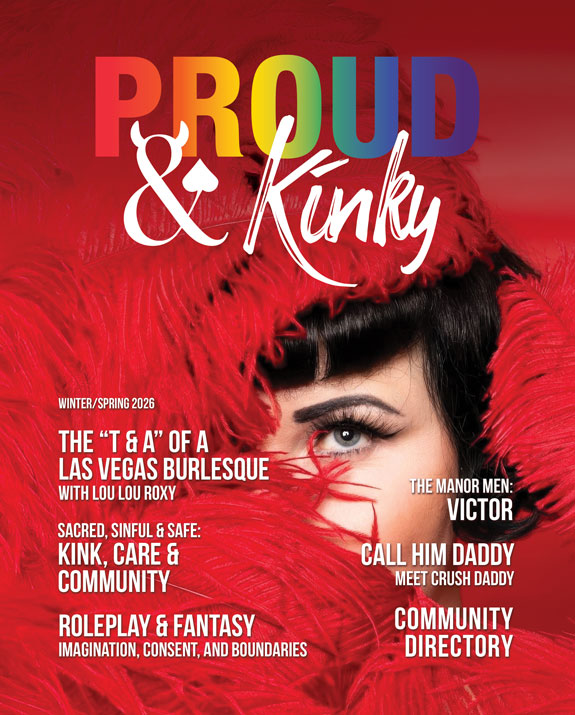
This article was originally published in the eighth issue of PROUD & Kinky Magazine. You may read it in its original format here.
Advertisement