The “T & A” of a Las Vegas Burlesque
By PROUD & Kinky Staff | Photography courtesy of Lou Lou Roxy
In a recent “5 Martini Lunch,” Las Vegas PRIDE had the opportunity to chat with one of our favorite local and vocal Burlesque performers. We chatted about strong men and women, strong cocktails, and, most importantly, the challenges of vaudeville/burlesque authenticity in performance in this “model type” home we call Las Vegas Entertainment!
Lou Lou Roxy and Norma had a great afternoon!
Lou Lou: Being a plus-size entertainer is not without its challenges. In a world that has held tight to the idea that worth, attraction, and talent are directly tied to how well you can conform to whatever the current appearance trend may be, it’s an act of rebellion to get on stage and do things usually reserved for those in the narrow margin of being deemed conventionally attractive.
And while fatphobia is alive and well, burlesque has been ignoring its demands and offering a safe haven for performance artists labeled as other, regardless of how well they fit the mold of conventional attractiveness. Burlesque provides an opportunity for radical body liberation, a way to force oneself out of the false prison of “I don’t deserve to be seen until I meet requirements.”
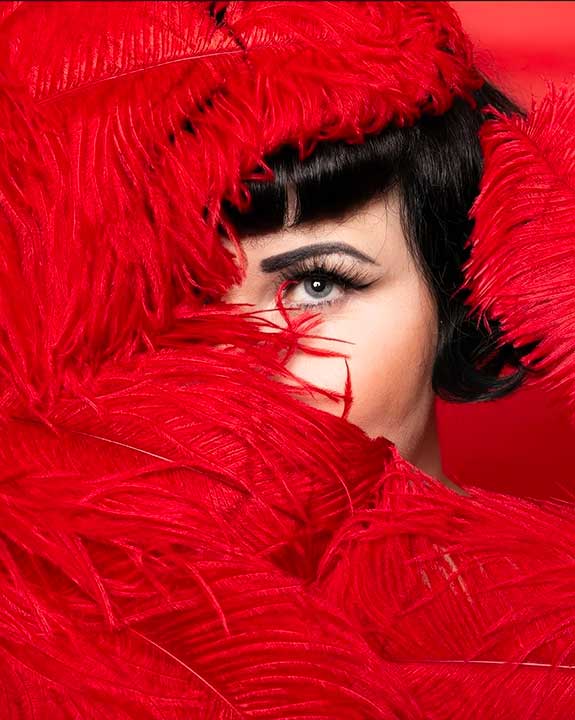
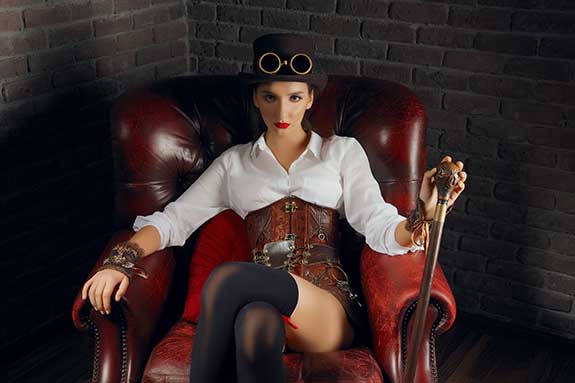
Lou Lou Roxy (Photo by @mantispictures)
I chose the act of rebellion. And with the world oddly nostalgic for the 90s, a time when raging fatphobia was forcing people into eating disorders and devastating body dysmorphia, seeing bodies on stage who aren’t that aspirational type of thin, who are being applauded instead of diminished, is more important than ever.
Norma: What about – The Power of “Existing” on Stage
So much of how we used to assign value to who is “allowed” to get on stage is so deeply ingrained in our consciousness that the very thought of someone who isn’t considered worthy even setting foot on stage gets a lot of people bent out of shape. Not surprising when they have been committed to the idea that happiness doesn’t arrive until they’ve hit a certain goal weight… and there I am, a fat girl who looks like their nightmare before picture, happy, powerful, and desired. And joining me are people of every skin color, body type, gender identity, age, and ability. We’re on a stage, being celebrated with applause and paper money. No waiting til I reach a goal appearance, no waiting for someone’s approval, no promises that we’re working on changing, zero shame, and forcing them to confront those nagging internal biases. Essentially, challenging and proving them wrong. It’s messy for them, I’m sure, but now they know it’s not impossible to be a desirable main character and look anything but typical. The most important lesson learned is that shame cannot be demanded. It won’t stop people from demanding it; they’ll just die waiting to get it from us.
One of the most powerful things about being on stages we were told were reserved exclusively for others is how fearlessly the ones on those stages give to their audience. It feels more like a revival, a sacred temple offering, a battle won, a homecoming, Valhalla, a sanctuary.

Lou Lou Roxy
Norma: And tell me about overcoming pressure in a world that demands thinness.
The pressure is ever-present. The backhanded compliments of “being soooo brave. I could never”, or being a “real woman”. The shows that only cast one specific type. Sharing a dressing room with talented people who got kicked from a show they helped create because a crap venue decided to listen to someone who claimed they’ll get “better girls,” code for thin and more attractive to straight male patrons. The other entertainers who abandon their activism for more stage time. The backstage talk from someone excited to try Ozempic, hoping it will get them more bookings. The dancers concerned about harassment for being non-conforming in so many ways. Then there’s the added pressure of being a good fat. It’s almost expected that I’ll be comic relief, because the fat funny friend trope is still very much accepted. Strangers on the internet love to remind us that they’re certain we’re going to die any day now, and they have other strangers on the internet try to pass personal biases off as fact or concern. People will describe a plus-size performance as sloppy if they’re not the correct type of curvy, high glam, high femme, and willing to laugh with their oppressors. I am never willing to laugh with mine or anyone else’s oppressors. That has cost me gigs. I don’t care.
You can’t be too much of anything. And then you decide to stop shrinking and start taking up space. Within that space, I found power over performative actions.
As the world becomes a more politically vocal landscape, demand for diverse casting rises from the ashes of decades of gatekeeping. The ones who are now mostly unwelcome are the bigots. (I say mostly because there are always producers and audiences who are willing to look the other way if it means potential benefit for them). I won’t lie, the petty joy of making the close-minded phobic crowd uncomfortable is a personal hobby of many of us.
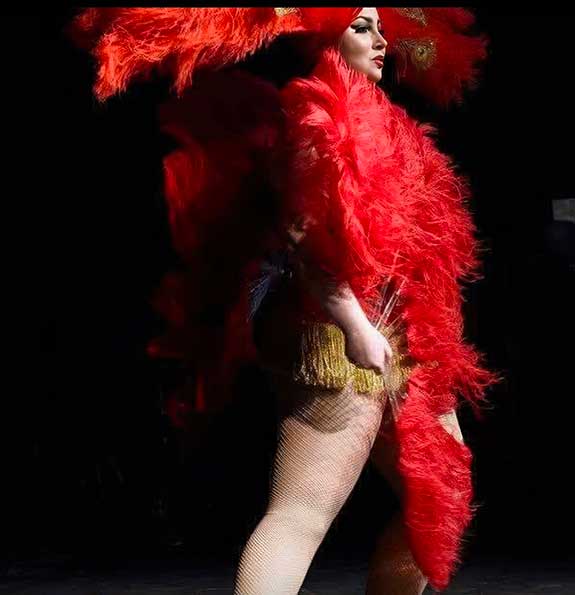
Lou Lou Roxy
Norma: Tell me about finding confidence and authenticity.
About 10 or so years into my burlesque career, I began to realize that what makes an entertainer valuable isn’t attractiveness or conformity. It’s authenticity. It’s unwavering confidence that makes them feel it. It’s connecting with your audience. If I give you a performance and you feel nothing, I did it wrong. My audiences aren’t there because I’m hot. I’m not concerned if they think I’m hot. I’m concerned about their feelings. If they’re not feeling a damn thing, even if it’s just contempt for us existing on that stage, we did a disservice to the butts in the chairs. I owe them that emotional experience. That authentic connection isn’t just healing for me, it’s healing for the audience. Seeing someone who looks like you on stage, who is not being treated as the butt of the joke, is incredibly validating. When I felt it, it changed me. I try to keep that fire burning for others. Talent and conventional attractiveness are not mutually exclusive.
Activism has become part of my performance. Shutting up is not happening. Visibility, solidarity, and an unwavering commitment to change will forever be constants. It’s a huge part of the authenticity that audiences connect with and trust.
The fact that the world is currently on fire is not lost on me. Burlesque, drag, and performance art have an obligation not just to entertain, but to be a beacon of change, acceptance, and accountability, to be a truly safe space, and to be an unstoppable force for the better. I do understand that people need to escape from this fire. There’s no escaping while things are still burning. So yes. You can expect things to continue to be loud statements. So many entertainers are from marginalized communities. Ignoring that is ignoring their struggle, and I refuse to do that. Solidarity is key.

Lou Lou Roxy
Vulnerability is never easy publicly, but it’s a huge part of authentic stage performance. Another authenticity marker I drive home is that sometimes body neutrality is where you end up. Radical love of yourself and your body might not be the X on your treasure map, but that gray area of acceptance and knowing the size of your body is the least interesting thing about you is still liberation. Embracing your body for what it can do rather than how it looks will set you free from expectations to shout from the rooftops that you’re unaffected by society’s view of you. It lets you feel the frustration, because it will be there sometimes anyway. You just now have a different way to work past it. This has given me a resilience I didn’t have before.
My burlesque mother was Big Fannie Annie. At 6’3″ and more than 400 lbs at one point, she was never small. Or quiet, for that matter. If she didn’t like you, you knew. But if she did like you, she made you family. Her stories made me realize that powerful plus-size dancers have been here since the dawn of time. Fannie Annie refused to be a jolly motherly type, something that was expected of fat entertainers back then. She was an undeniable force of nature, seducing men around the world, making a fortune, fucking things all the way up. Her comedy wasn’t self-deprecating. It was raunchy. It was an assault on your ideals. You’ll deal with getting crammed into her tits out cleavage, then thank her for the honor. If anyone dared to bring up the fact that she was the biggest woman in the room, they’d get an eye roll and a “yeah, no shit, you fuckin’ genius.”
It was her who often shook me out of yet another depressive mood, being upset with seeing only thin girls get hired with a “Jesus Christ, just fucking get out there and do it! If people didn’t want to see you, you wouldn’t be performing. There are girls who need this, and people who want to see it. Fuck ’em if they say you’re not whatever”. It was a huge awakening that working with what I have right now, well…works just fine. She wasn’t wrong. May she rest in peace, or in a circus tent filled with male strippers. I think that actually happened to her once. She was a superstar, so very likely it did. When people say I’m following in her footsteps, I answer, “Oh, honey…I can barely keep up with them”.
So, in the end, I am and will be here, demanding change, fostering safe spaces for marginalized entertainers, and trying to be a voluptuous lighthouse in a sea of thin, white, heteronormative expectations. I’m here if you need me. And yeah…fuck ’em if they tell you you’re not whatever enough.
Norma: I concur! Can I tell you how much I love you!?
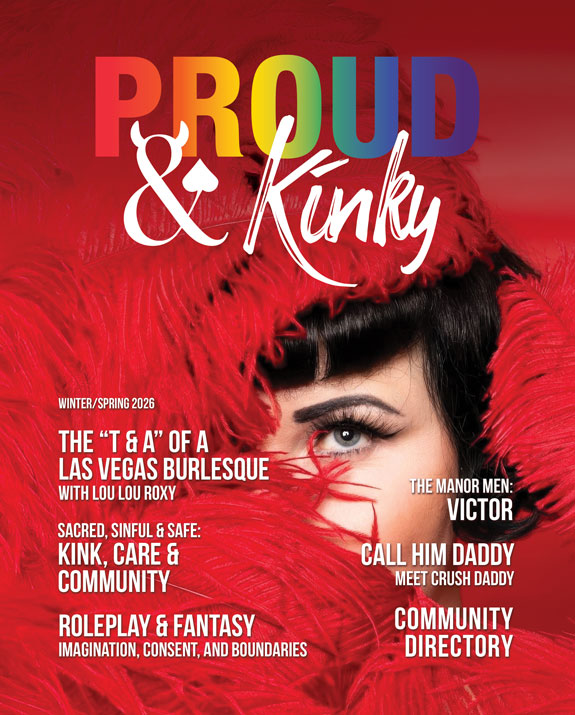
This article was originally published in the eighth issue of PROUD & Kinky Magazine. You may read it in its original format here.
Advertisement